Pothole & Patch Repair
Pothole & Patch Repair in Austin
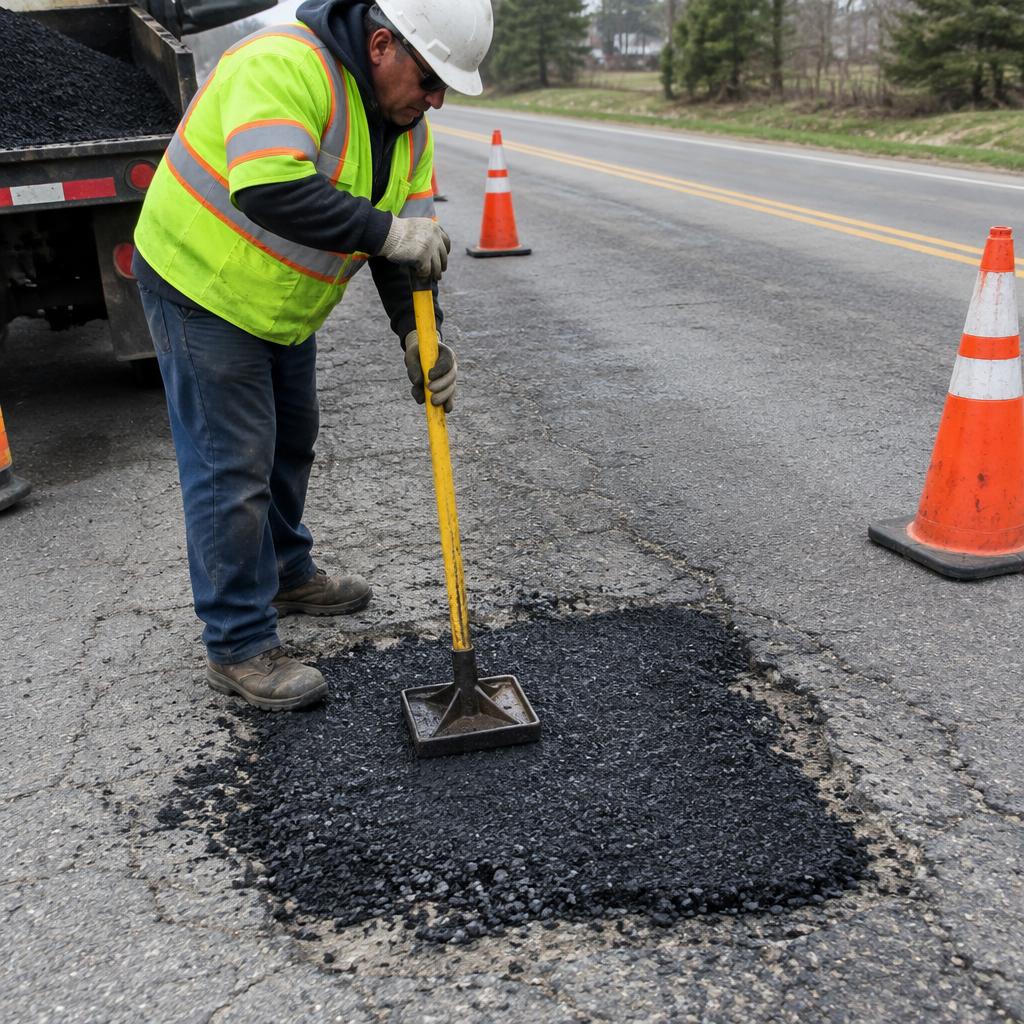
Saw-cut, dug out, and filled with hot-mix asphalt so the patch sits flush and holds up to traffic instead of popping out in a few months.
How potholes form
Water gets in through cracks and softens the base under the asphalt. Traffic pushes down on the weak spot until the surface breaks apart and the loose pieces work out. Austin's clay soils swell when wet and shrink when dry, which speeds the whole thing up.
Why quick patches fail
Bagged cold patch is fine for an emergency, but it rarely bonds well to the sides of the hole, and it doesn't fix the soft base underneath. It usually pops out within months and you're paying for the same hole twice.
A repair that lasts
We saw-cut clean, square edges around the damage so the new asphalt has a solid edge to bond to, then dig out the broken asphalt down to firm material.
If the base is soft, we replace and compact it. Then we apply a tack coat, fill with hot-mix asphalt, and compact it in layers until the patch sits flush with the surrounding surface. The edges are sealed to keep water out.
Water is the real fix
If the same spot keeps failing, water is pooling there. We'll point it out and suggest the drainage or regrading fix, because patching a low spot that holds water is a repair you'll buy again.
Emergency response
A pothole in a customer lot is a trip hazard, a cart-stopper, and a claim waiting to happen. Call us and we'll get it made safe, then schedule the permanent repair around the weather.
Preventing the next one
Fill cracks early, sealcoat on schedule, and keep drains and inlets clear so water leaves the lot instead of soaking into it.
Quick questions
Can I drive on a patch right away?
Hot-mix patches carry traffic once they cool, often within an hour or two, depending on the temperature.
How many potholes can you fix at once?
We batch patches on a route, so a handful of holes in one lot is a normal visit. Call us before it gets to a dozen.