Crack Filling & Sealing
Crack Filling & Sealing in Austin
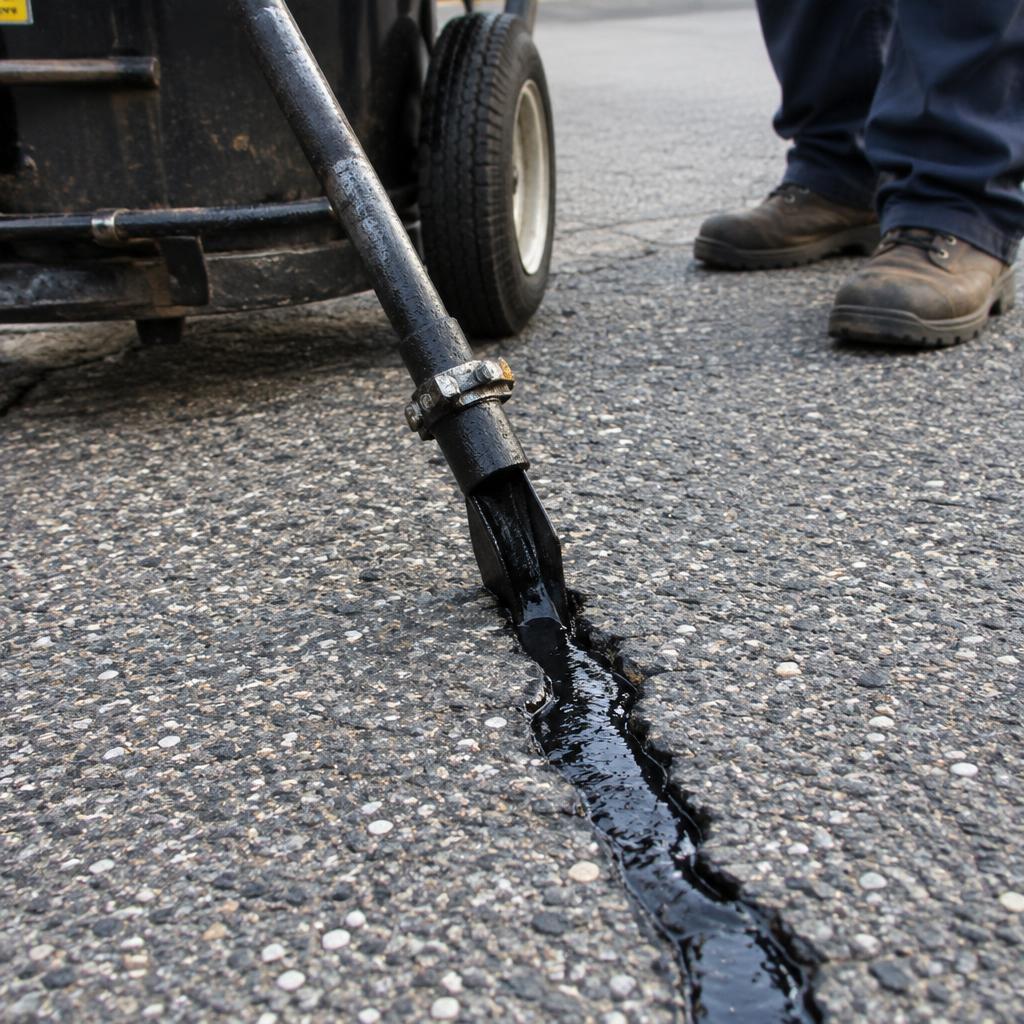
Hot-pour rubberized sealant keeps water out of the base, so hairline cracks don't turn into potholes.
Why small cracks matter
A crack is a doorway for water. Rain gets in, softens the base under the asphalt, and traffic pushes down on the weak spot until the surface breaks apart. That's how a crack you could have sealed for a few dollars becomes a pothole.
Sealing cracks is the cheapest work in asphalt maintenance and the one that saves the most money later.
How we fill them
We clean each crack out first — air and heat to drive out dust, dirt, and moisture, and routing where the crack is too narrow or dirty to bond.
Then we apply a tack coat and pour hot rubberized asphalt sealant into the crack, squeegeed flush with the surface. The rubber stretches and shrinks with the pavement instead of cracking out when the temperature swings.
Which cracks get which treatment
Hairline cracks take a sealant poured or squeegeed in place. Cracks about a half inch to three-quarters inch wide are cleaned and filled with rubberized sealant.
Cracks wider than that, or areas with alligator cracking, usually need a patch or an overlay instead. Sealing a failing section just hides it for a season.
Order of work
Clean, then fill cracks, then sealcoat, then stripe. Sealcoat is a protective film — it does not fill cracks. Filling first is what makes the job last.
Fresh hot-pour filler needs to cool and cure before sealer goes over it, which is usually the same visit or within a few days.
Timing
Crack sealing needs dry, warm pavement so the sealant bonds. We work around rain and cold fronts, and we reschedule if the forecast turns.
Quick questions
Does crack filling fix the base?
No. It keeps water out so the base stops getting worse. If the base has already failed, that section needs a patch or rebuild.
Should cracks be filled before sealcoating?
Yes. We fill and seal cracks first, then apply the sealer over the whole surface.