The Best Time to Sealcoat Your Driveway in Austin
6 min read
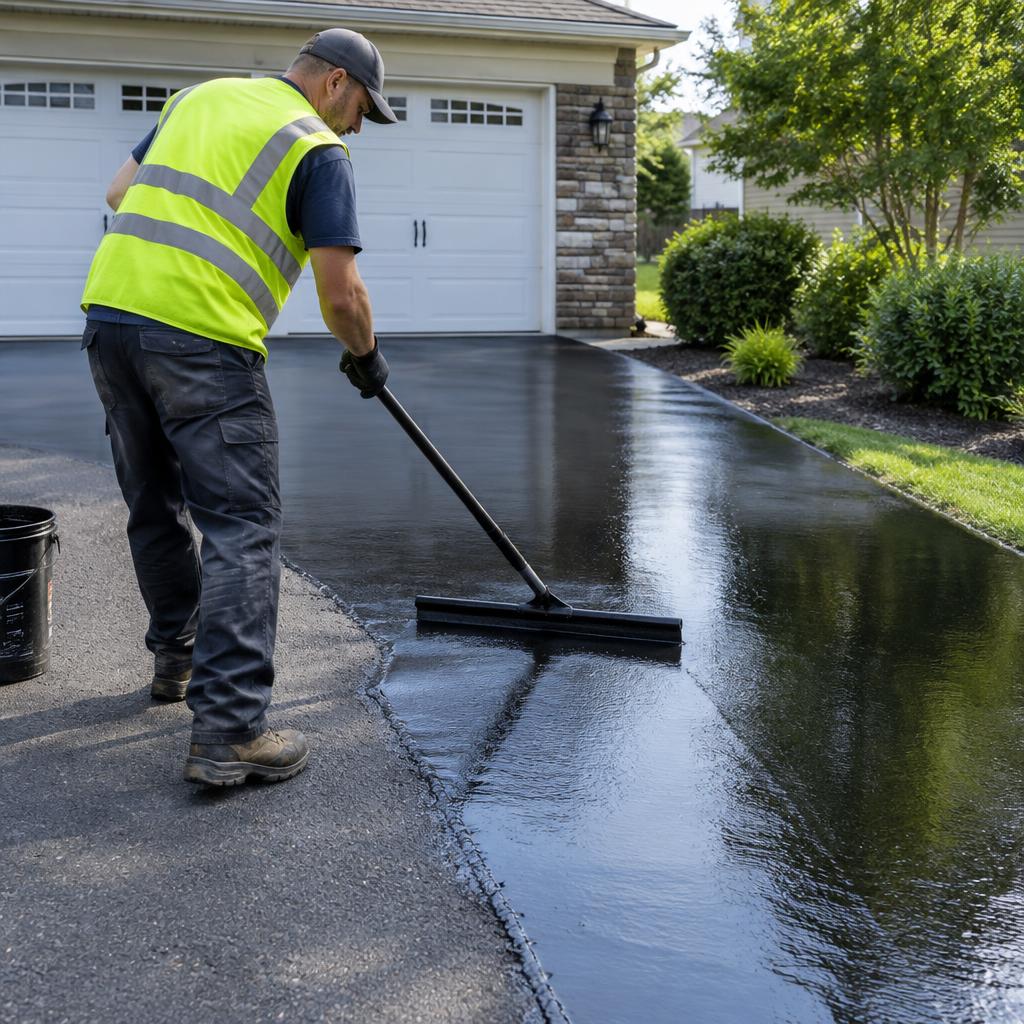
Temperature, rain, and timing all matter. Here's when sealcoat cures best in Central Texas, and how often to reapply.
The short answer
In Austin, the best months to sealcoat are usually April through June and September through November. Days are warm, nights stay above 50°F, and there are long dry stretches.
Sealcoat needs warmth and sun to cure. Most manufacturers ask for a surface and air temperature of at least 50°F and rising, with no rain expected for 24 to 48 hours.
Can you sealcoat in an Austin summer?
Yes, with care. When the pavement is above about 130°F, sealer can dry too fast on top and leave streaks or a weak bond. We schedule summer jobs for early morning or evening and lightly mist hot pavement so the sealer lays down evenly.
What about winter?
Central Texas winters are mild, but cold nights and freezes slow curing. A warm, sunny stretch in winter can work. A forecast cold front or freeze means we wait.
Watch the rain forecast
Rain on fresh sealer can wash it off before it sets. We check the forecast and reschedule if heavy rain is likely within a day of the job. Spring storms in Austin come fast, so flexible scheduling helps.
How often should you sealcoat?
For most driveways, every 2 to 3 years. Busy commercial lots may need it every 1 to 2 years. New asphalt should cure for 6 to 12 months before its first coat, so the oils in the mix can work out.
A simple test: if your driveway has faded from black to gray and water soaks in instead of beading up, it's time.
Before and after the job
Move cars off the driveway the night before and turn off sprinklers for 48 hours. Stay off it on foot for about 24 hours and with cars for 48 to 72 hours. In hot sun, avoid sharp turns with the steering wheel for the first week to prevent scuffs.
Quick questions
How long does sealcoat take to dry?
Usually 4 to 8 hours to walk on and 24 to 48 hours to drive on, depending on heat and humidity.
Should cracks be filled first?
Yes. Sealcoat does not fill cracks. We fill cracks with hot-pour rubberized sealant before sealing.